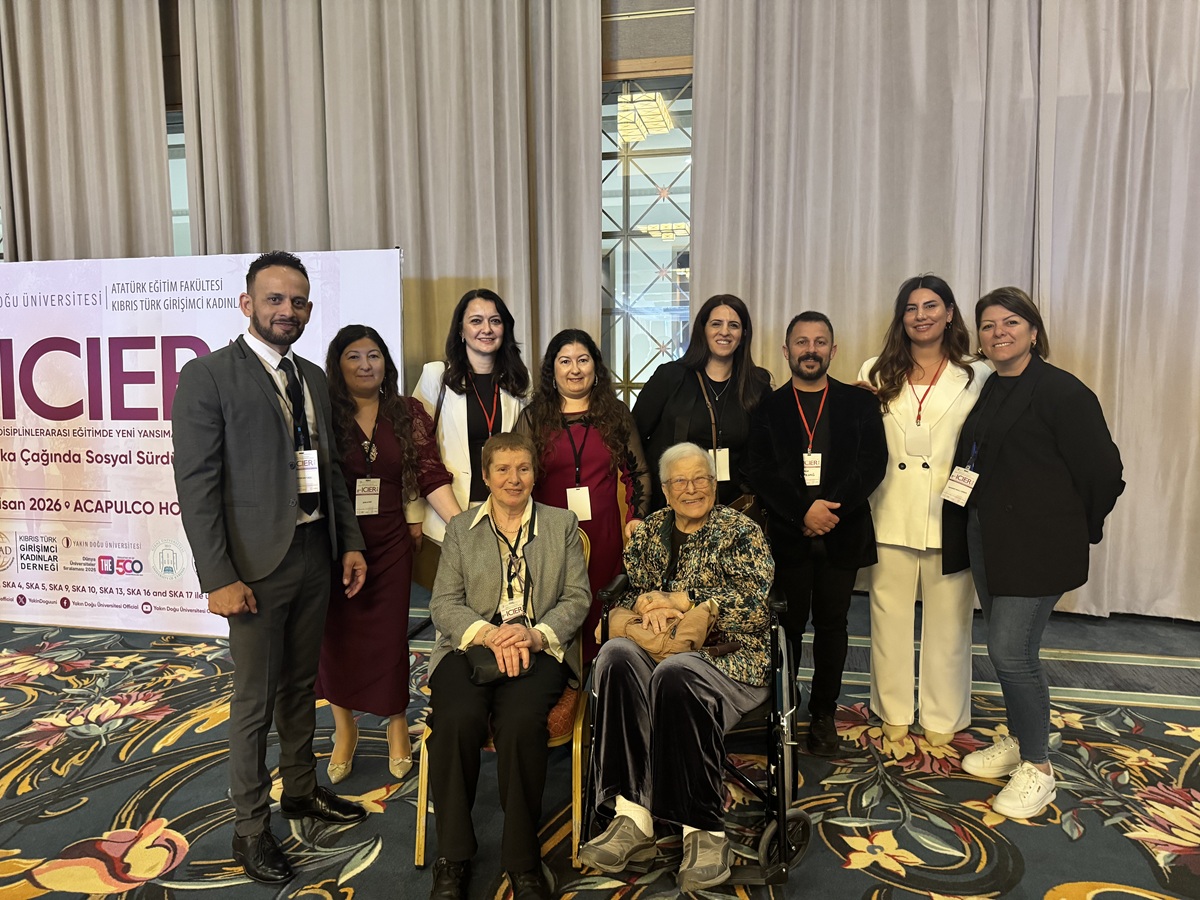
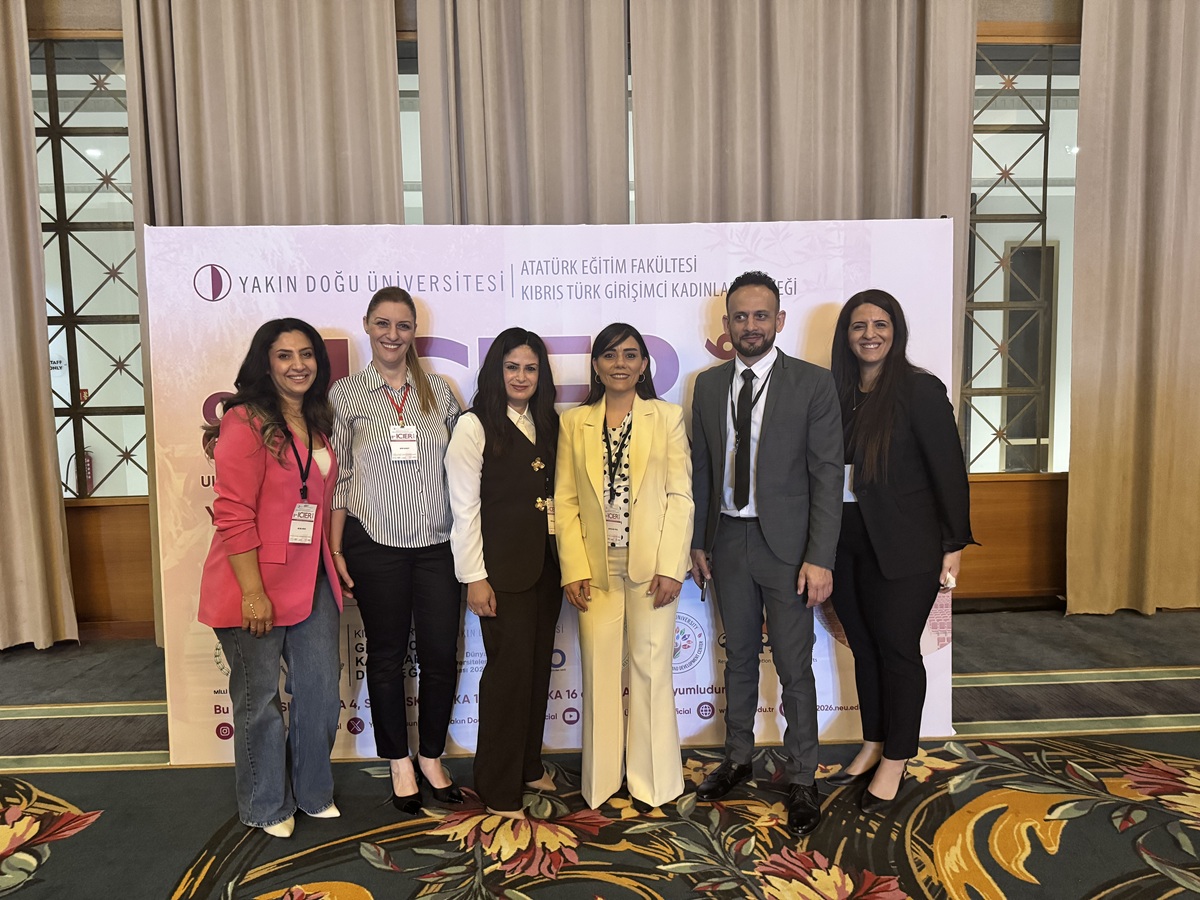
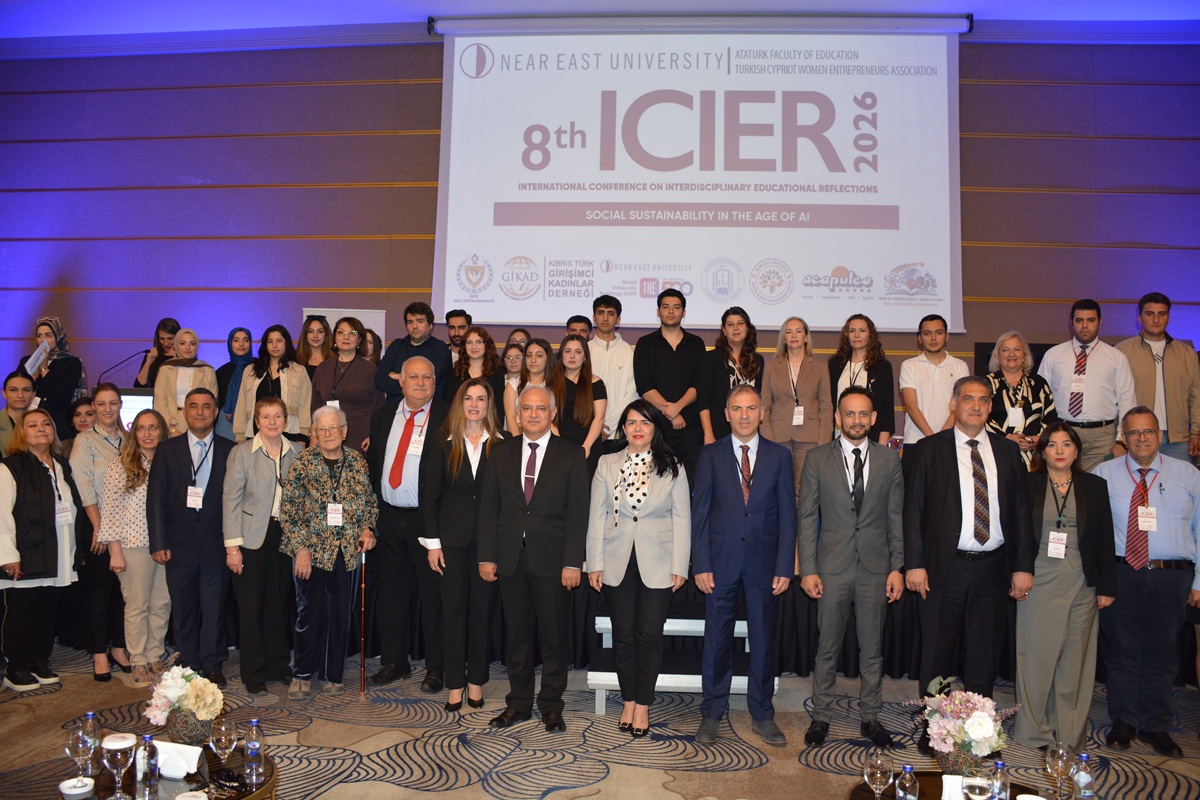
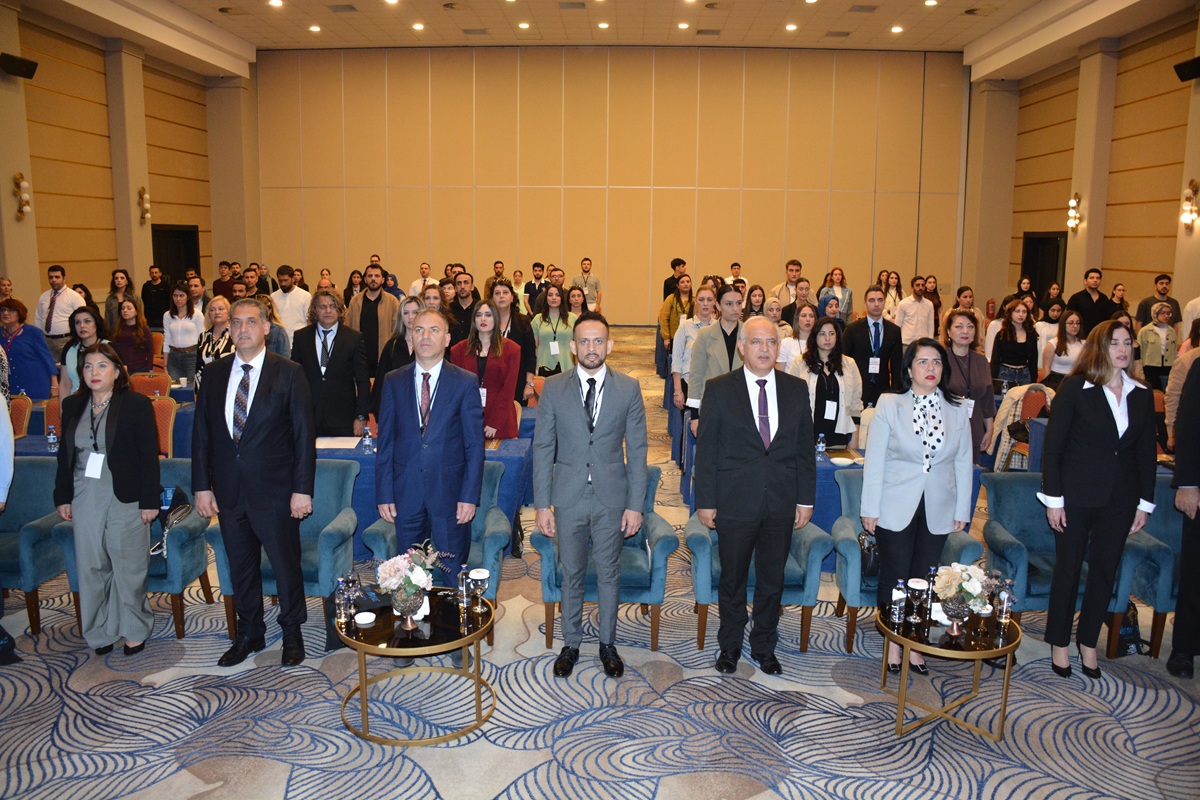
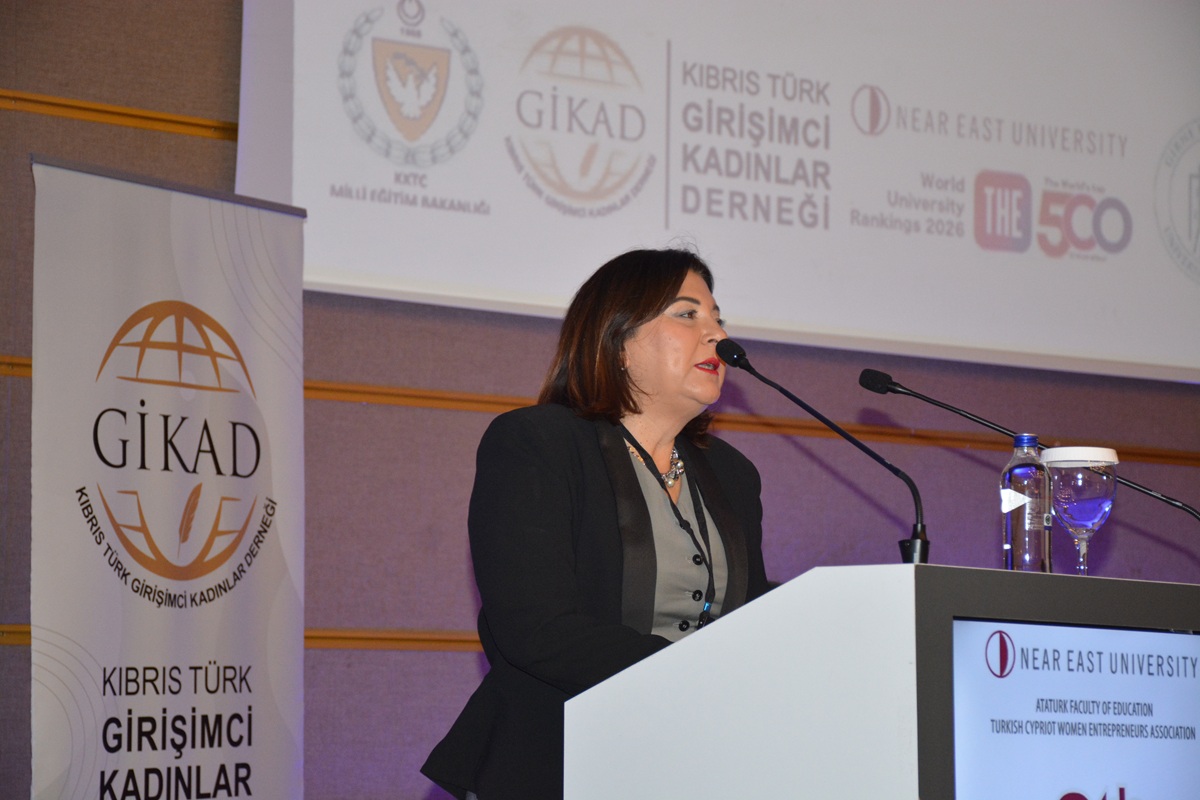
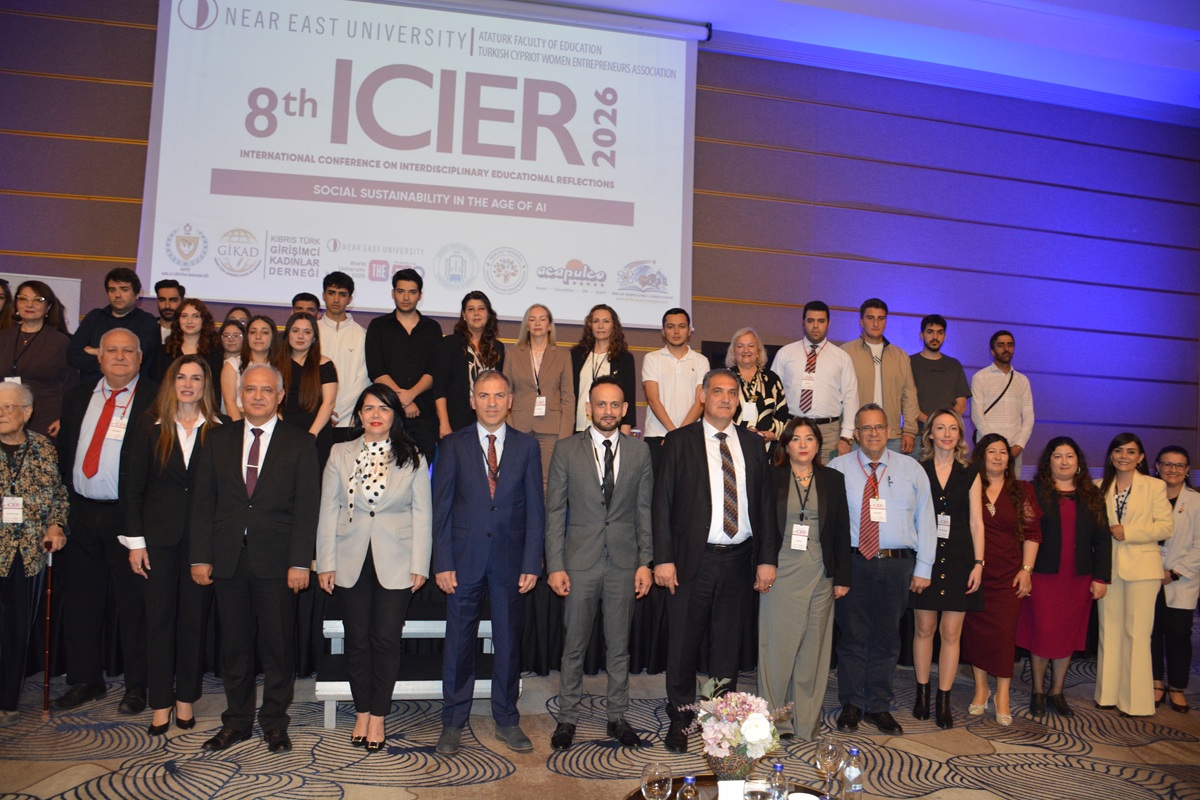
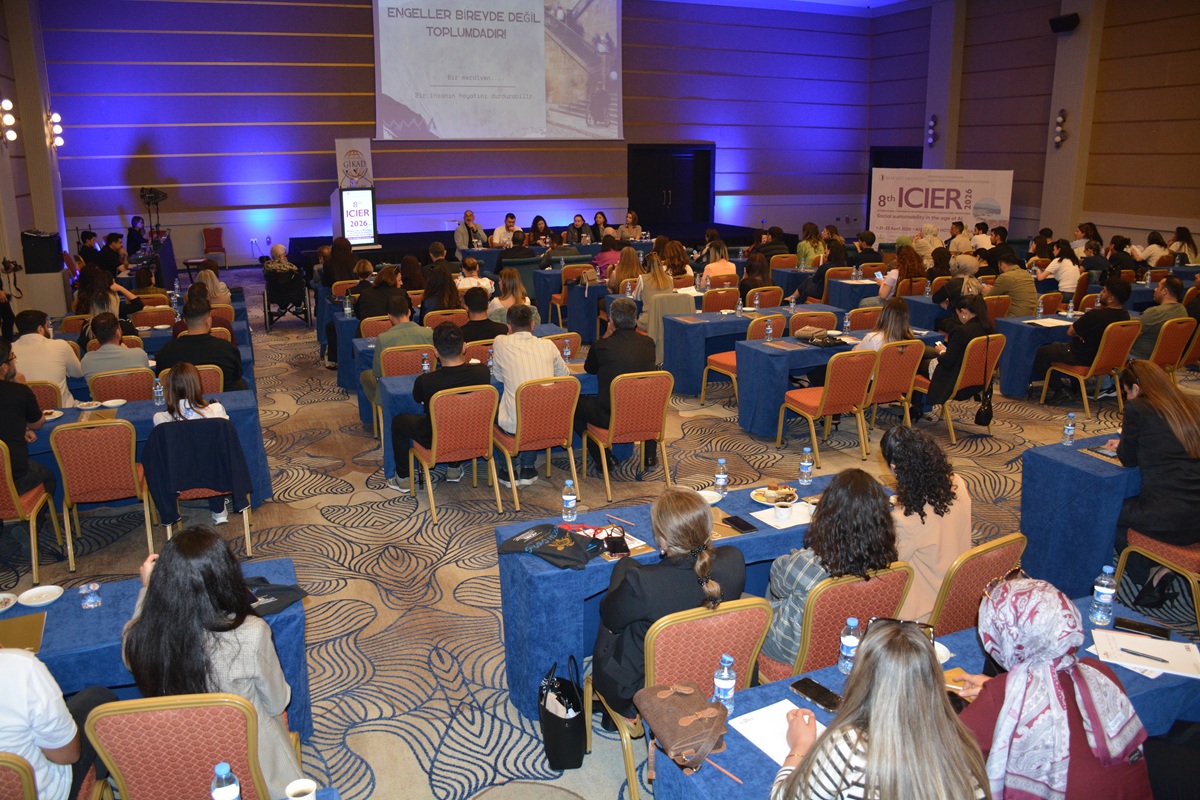
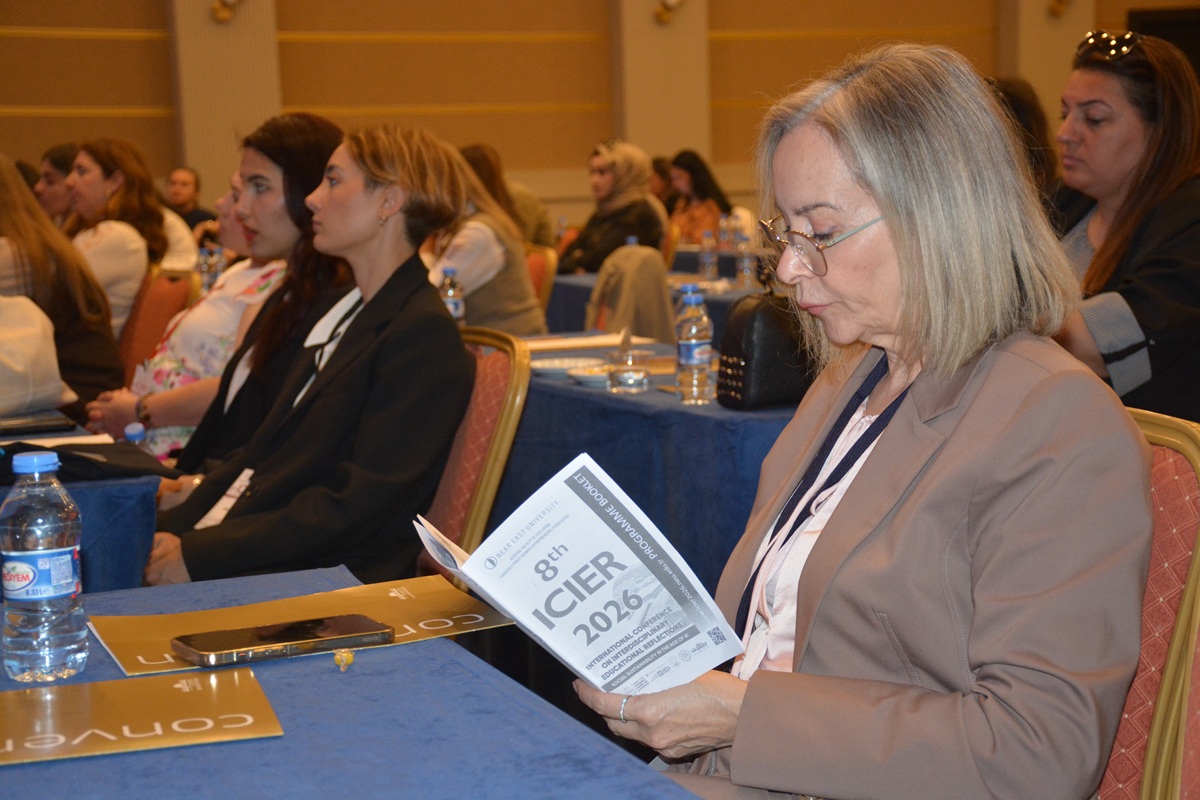
ICIER 2026 Brings Together Scholars to Discuss Social Sustainability in the Age of Artificial Intelligence The International Conference on Interdisciplinary Educational Reflections – ICIER 2026, organized by the Atatürk Faculty of Education at Near East University with the sponsorship of the Cyprus Turkish Entrepreneurial Women’s Association (GİKAD), brought together academics, teachers, researchers, graduate students and education professionals under the theme “Social Sustainability in the Age of Artificial Intelligence.” Held on 21–22 April 2026 at Acapulco Resort Hotel in Kyrenia, the conference received 165 applications from 12 countries, with 140 papers accepted following the evaluation of the international scientific committee. Over the course of two days, ICIER 2026 reached more than 500 participants, offering a rich academic programme that included invited talks, panel discussions, workshops and paper presentations. The conference opened with the speech of Prof. Dr. Umut Akçıl, Dean of the Atatürk Faculty of Education and Conference Chair. In his address, Prof. Dr. Akçıl emphasized the responsibility of educational institutions to shape the future with social responsibility, ethical awareness and solidarity while keeping pace with technological transformation in the age of artificial intelligence. Prof. Dr. Akçıl also underlined that the Atatürk Faculty of Education has shaped the conference theme around the Sustainable Development Goals for the last three years. He noted that one of the faculty’s important achievements is the establishment of an international education sciences conference that has become a recognized academic tradition on the island. This year’s collaboration with GİKAD further strengthened the conference’s engagement with civil society and its connection to social impact. The first invited lecture was delivered by Prof. Dr. Hafize Keser, who presented on “A Roadmap for the Societies of the Future in the Age of Artificial Intelligence.” In her presentation, Prof. Dr. Keser addressed the relationship between artificial intelligence, digital transformation and the Sustainable Development Goals, emphasizing that technological progress should be guided by principles of equity, inclusion and social responsibility. She also drew attention to global inequalities in access to digital technologies and underlined the importance of ensuring that the benefits of artificial intelligence are shared more fairly across societies. A notable part of her session was the introduction of a language translation application developed by her team. The application enables users to listen to speakers in the language of their choice through instant translation, offering an inclusive solution for multilingual academic and professional environments. Participants had the opportunity to experience the application during the session, adding an interactive dimension to the invited lecture and demonstrating how digital tools can support accessibility, participation and knowledge exchange. Panels on Social Sustainability and the Role of Universities The first day continued with paper presentations, workshops and a panel titled “Solving Social Problems through Social Sustainability.” The panel brought together speakers from different fields to discuss inclusivity, public health, public services, women’s entrepreneurship and lifelong learning. Dr. Günay Kibrit addressed the power of inclusivity in overcoming social barriers; Teyfide Tecel Hatipoğlu discussed the contribution of universities to combating drug abuse; Alev Ecevit focused on the strategic importance of public services in sustainability; Özlem Ratip highlighted the connection between women’s entrepreneurship and social sustainability; and Assoc. Prof. Dr. Emete Toros examined active ageing and lifelong learning as key dimensions of sustainable societies. On the second day, the conference hosted a second panel titled “The Role of Universities in Social Sustainability.” The panel featured Prof. Dr. Fatoş Silman, Dean of the Faculty of Education at Cyprus International University and member of the Center of Excellence; Prof. Dr. Murat Özgören, President of Near East University’s Center of Excellence; Prof. Dr. Terin Adalı, President of the Center of Excellence at the University of Kyrenia; and Assoc. Prof. Dr. Eda Yazgın, member of the Social Responsibility Center at Eastern Mediterranean University. The discussion focused on the responsibilities of universities in social transformation, knowledge production and sustainable development. Workshops Linking Artificial Intelligence, Inclusion and Educational Practice ICIER 2026 also offered practice-oriented workshops addressing current issues in education. On the first day, Prof. Dr. Ayşegül Ataman, an expert in special education, delivered a two-hour workshop on the use of artificial intelligence in the education of gifted children. In a parallel session, Assoc. Prof. Dr. Sertan Kağan, an expert in guidance and psychological counselling, provided training for teachers on psychological first aid and crisis intervention in schools. Each workshop was attended by approximately 40 teachers. The second day’s workshop programme further expanded the discussion on the educational implications of artificial intelligence. Prof. Dr. Sibel Dinçyürek addressed strategies for coping with cyberbullying in the age of artificial intelligence, while Prof. Dr. Sinan Saraçlı focused on the role of artificial intelligence in research processes. International Perspectives on Artificial Intelligence and Education The second day also included invited talks by distinguished scholars from Türkiye and the United Kingdom. Prof. Dr. Nergiz Çağıltay from Hacettepe University delivered a presentation outlining the development of the artificial intelligence era and its implications for education and society. She was followed by Prof. Dr. Gheorghita Ghinea from Brunel University London, who contributed an international perspective to the conference’s interdisciplinary discussions. Throughout the two-day programme, paper presentations created a platform for researchers, academics and graduate students to share current studies in education, artificial intelligence, sustainability and social responsibility. The conference also provided opportunities for academic networking and future collaboration among participants from different institutions and countries. Awards Presented in Memory of Prof. Dr. Mehmet Altınay At the end of the conference, an award ceremony was held in memory of the late Prof. Dr. Mehmet Altınay, former Minister of National Education and Minister of Finance, and Founding Dean of the Faculty of Tourism at the University of Kyrenia. Awards were presented in the categories of Best Conference Paper and Best Student Paper. The Best Conference Paper First Prize was awarded to Aslan Aydoğan. The Second Prize went to Tezcan Muslu, Selin Çakır, Özay Önöral and Sevcan Kurtulmuş Yılmaz, while the Third Prize was presented to Sahar Ebadinezhad. In the Best Student Paper category, the First Prize was awarded to Hatice Hande Şahan Sev and Hüseyin Uzunboylu. The Second Prize was awarded to Abdullahi Usman Jalingo and Engin Baysen, and the Third Prize went to Maryam Samer. The conference concluded with closing remarks by Conference Chair Prof. Dr. Umut Akçıl, who expressed his appreciation to GİKAD and Acapulco Resort Hotel for their support. During the closing ceremony, plaques of appreciation were presented to Dr. İçim Çağıner Kavuklu, President of GİKAD, and Özer Özbilen, General Manager of Acapulco Resort Hotel. By bringing together scholars, educators and civil society representatives around the theme of social sustainability in the age of artificial intelligence, ICIER 2026 highlighted the growing importance of interdisciplinary dialogue in education. The conference reaffirmed Near East University’s commitment to academic collaboration, sustainable development and the social responsibilities of higher education institutions.









ICIER 2026 Brings Together Scholars to Discuss Social Sustainability in the Age of Artificial Intelligence