The NCADS Student Symposium & Dentistry Fall Symposium, organized at Near East University on 20–21 November, brought together two days of scientific exchange, student engagement, and collaborative learning. Hosted by the Faculty of Dentistry in cooperation with the Dean of Students’ Office and the Northern Cyprus Dental Students Association (NCADS), the event highlighted both the academic rigor and the dynamic student culture of the institution. The first day emphasized student participation and social interaction, while the second day focused on intensive scientific sessions delivered by invited academics and senior dental students.

A Symposium Strengthening Scientific Identity
The symposium focused on scientific sessions that presented up-to-date knowledge across digital dentistry, aesthetic restorations, implant management, and emerging artificial intelligence applications. The program opened with remarks by Vice Rector Prof. Dr. Umut Aksoy, President of the Cyprus Turkish Dental Association Dr. Turhan Ulutekin, Vice Dean Assoc. Prof. Dr. Özay Önoral, and NCADS President Intern Dentist Berkay Hamurcu, each emphasizing the importance of integrating scientific innovation, professional ethics, and student-centered learning in contemporary dental education.
The scientific sessions showcased a broad spectrum of clinical and theoretical topics, delivered by invited academics and talented senior students from Near East University.
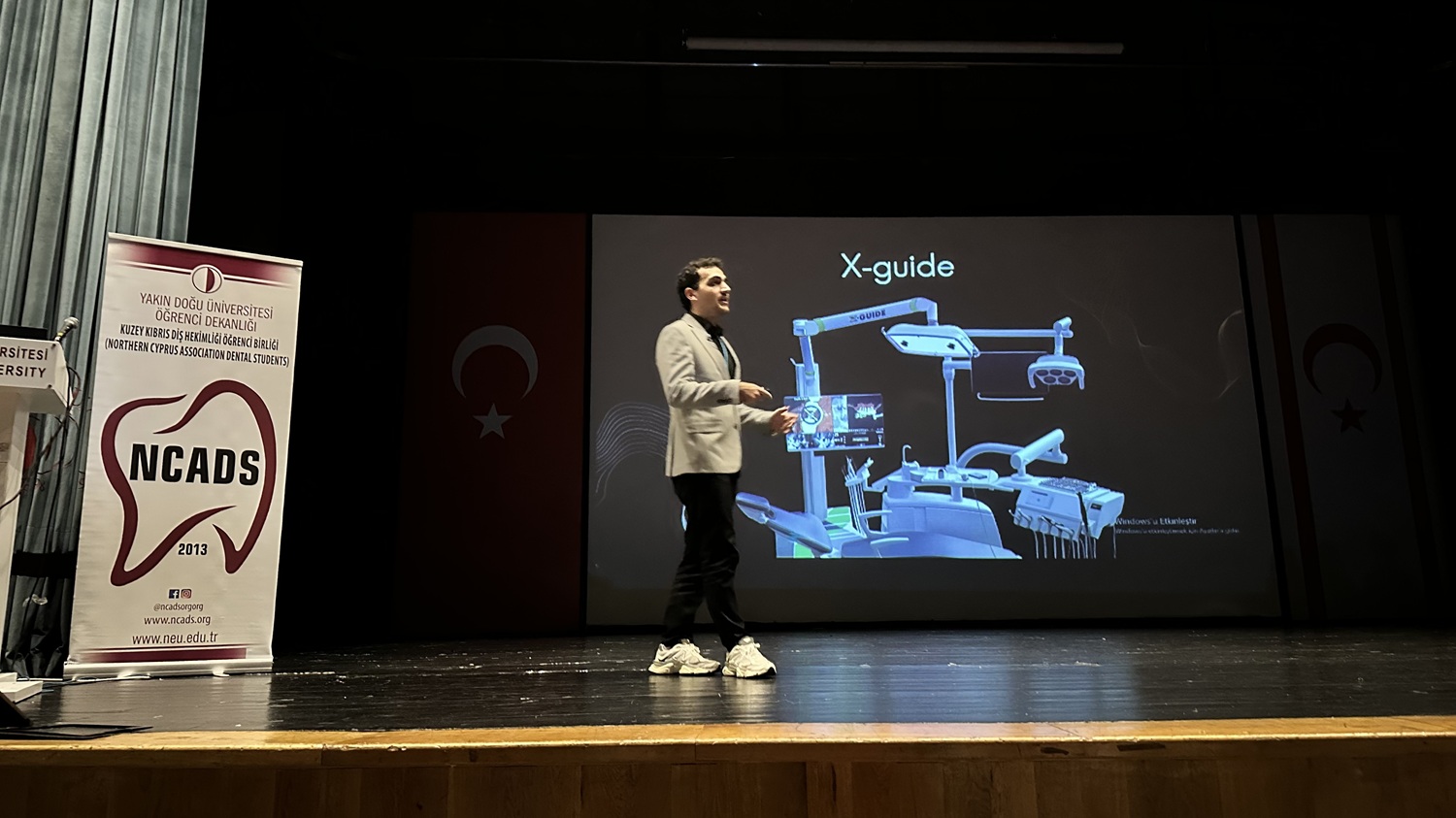
Assoc. Prof. Dr. Çağatay Dayan from İstanbul University – Cerrahpaşa delivered a comprehensive lecture on the clinical role and production workflows of occlusal splints, offering students a structured overview of both conventional and digital approaches. In his presentation, he outlined the primary indications for occlusal splints—including temporomandibular disorders, myofascial pain, parafunctional habits such as bruxism, and occlusal stabilization in restorative and prosthetic cases. Dr. Dayan also compared the fabrication stages of conventional splints, with the increasingly adopted digital workflows, which integrate intraoral scanning, virtual articulation, CAD-based splint design, and CAM milling or 3D printing. Highlighting the advantages of digital production—such as improved precision, reproducibility, and chairside adjustability—he also addressed limitations, including cost, operator proficiency, and software–hardware compatibility issues. By presenting clinical cases and step-by-step design principles, he demonstrated how digital splint therapy can enhance patient comfort, reduce adjustment time, and support interdisciplinary treatment planning.

Assoc. Prof. Dr. Uğur Mercan, an Oral and Maxillofacial Surgery specialist practicing in the private sector in Türkiye, delivered an insightful presentation on implant treatment approaches in geriatric patients. Emphasizing the global rise in the elderly population, he highlighted the growing responsibility of today’s clinicians to be fully equipped not only with the appropriate treatment options but also with effective communication strategies and patient-centered approaches tailored to older adults. Dr. Mercan outlined the unique clinical considerations of geriatric implant dentistry—including systemic health evaluations, medication interactions, age-related anatomical changes, and functional expectations—and discussed how these factors influence treatment planning. He presented a range of implant-supported prosthetic options suitable for this demographic, addressing their indications, expected success rates, and evidence-based risk mitigation strategies.

Assoc. Prof. Dr. Cansu Büyük from İstanbul Okan University delivered an extensive presentation on the expanding role of artificial intelligence (AI) in dentistry, highlighting its applications across diagnostics, clinical decision-making, and dental education. Focusing first on oral radiology, she demonstrated how AI-supported imaging systems enhance the detection of caries, periapical lesions, periodontal bone loss, impacted teeth, and anatomical variations through automated analysis and improved diagnostic accuracy. She also discussed AI algorithms designed to assist in cephalometric landmark identification, orthodontic treatment planning, and implant positioning, emphasizing their potential to reduce operator variability and streamline workflows. She highlighted how these technologies are reshaping clinical practice by offering data-informed insights, improving precision, and expanding the scope of minimally invasive dentistry. A significant part of her talk focused on AI in dental education, where interactive learning platforms, automated assessment tools, and virtual simulation technologies help students develop clinical reasoning, diagnostic accuracy, and psychomotor skills in a controlled, feedback-rich environment.

Research-Driven Presentations by Senior Dentistry Students
Following the invited lectures, the symposium continued with presentations delivered by senior NEU dentistry students, each delivering research-grounded presentations that combined scientific evidence, clinical reasoning, and up-to-date literature.
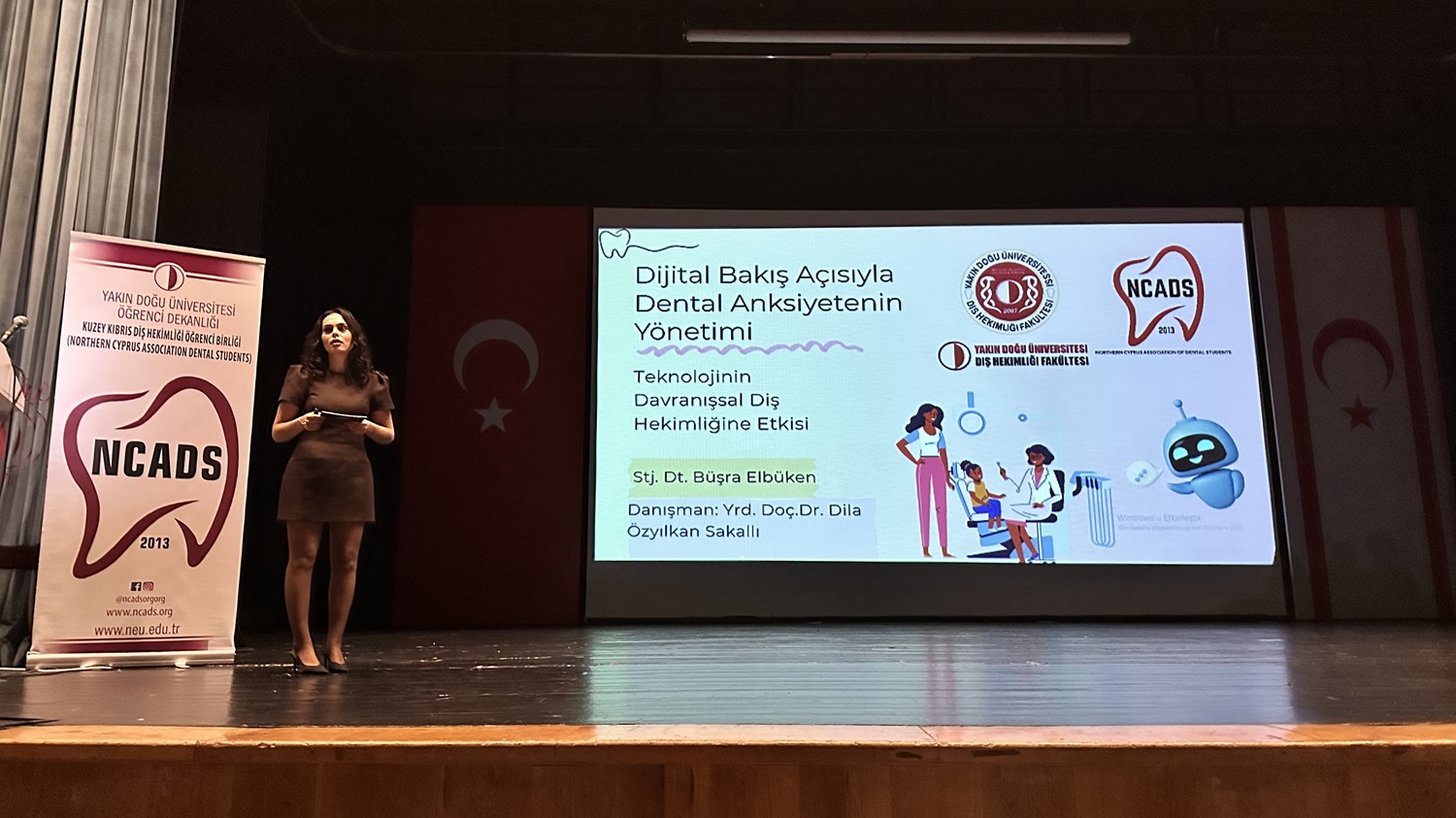
Intern Dr. İdil Cebeci provided a structured overview of clear aligner therapy, articulating the transition from conventional methods to digital workflows and highlighting current biomechanical principles shaping treatment planning. Intern Dr. Büşra Elbüken examined the use of digital tools in managing dental anxiety, presenting emerging technologies—from virtual reality applications to AI-supported behavioral assessment—that enhance patient experience and clinical efficiency.
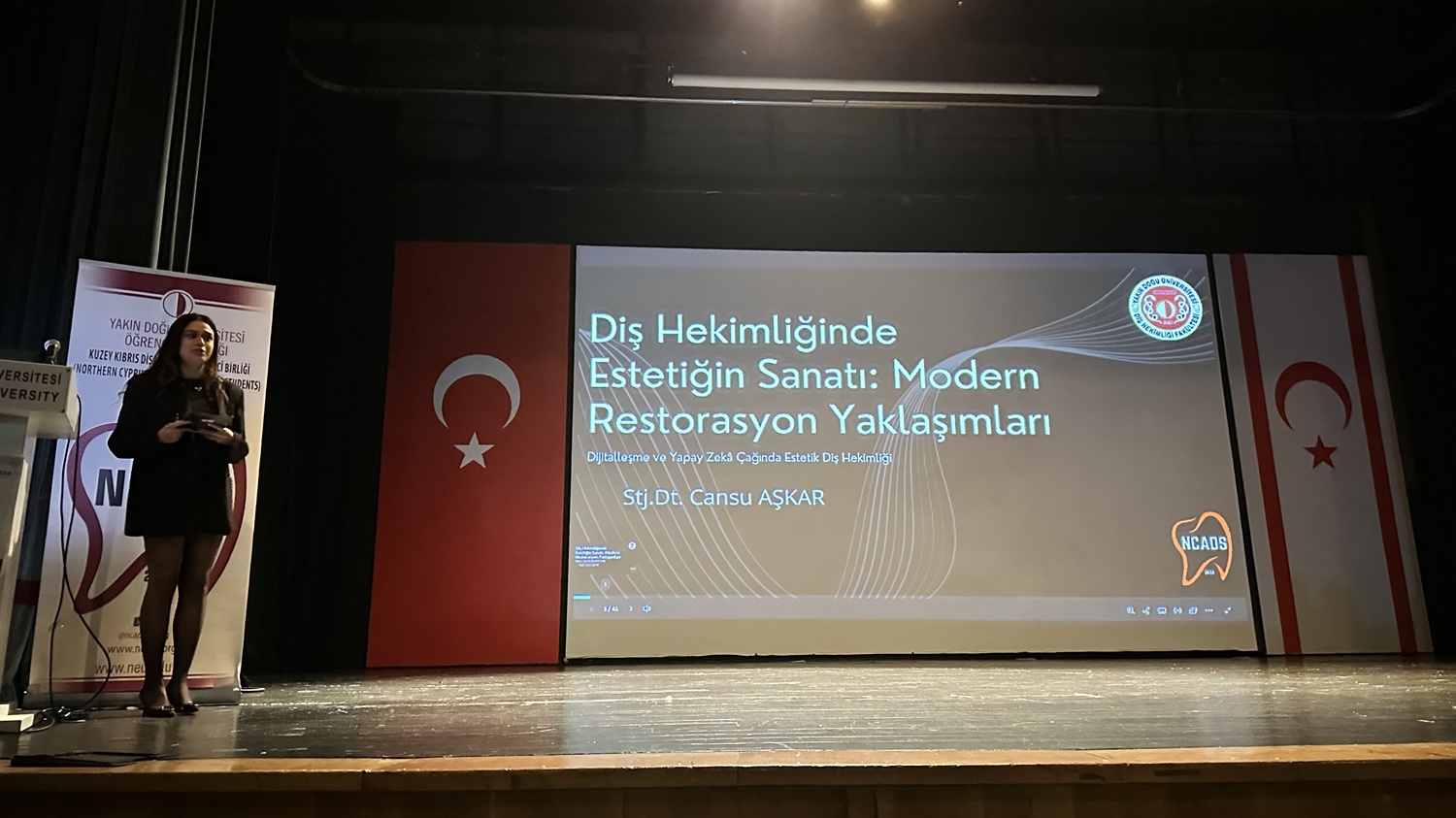
Building on critical diagnostic approaches, Intern Dt. Ege Erdoğan discussed nonodontogenic sources of pain that mimic endodontic symptoms, offering clinical pathways for differential diagnosis based on anatomical, neurological, and musculoskeletal considerations. Intern Dr. Cansu Aşkar presented a literature-informed review of aesthetic restorations, tracing their historical evolution while evaluating contemporary materials, bonding systems, and minimally invasive preparation techniques. Intern Dr. Hüseyin Emre Bölücek focused on risk-reduction strategies across the implant life cycle, integrating surgical, prosthetic, and maintenance perspectives supported by recent consensus reports.

Collectively, these student presentations demonstrated the growing research literacy and clinical maturity within the NEU Faculty of Dentistry. Their ability to synthesize scientific evidence, interpret case scenarios, and articulate clinical decision-making reflects the strength of the faculty’s competence-based and evidence-driven education model.
Social Engagement Strengthening Collegium Culture
Complementing the scientific program, the first day of the symposium featured a series of social activities that brought energy, collaboration, and friendly competition to the Dentistry Week celebrations. The Chess Tournament showcased strategic thinking and concentration, with Collegium Zenith emerging as the winner thanks to the impressive performance of Egemen Özbiçer and Can Benli, who delivered a strong, coordinated game from start to finish.

The Puzzle Competition required teamwork, communication, and rapid problem-solving under time pressure. Collegium Orion won the competition, while both Orion and Nova completed the challenge under the designated time threshold—earning additional Collegium points for their exceptional performance. The competition drew considerable enthusiasm, with teams demonstrating remarkable coordination and focus.

The atmosphere further heightened during the General Knowledge Quiz, in which students competed on behalf of their Collegium teams. Collegium Auris secured first place, supported by an energetic and engaging session moderated by Assoc. Prof. Dilan Kırmızı and Assoc. Prof. Özay Önöral. Their dynamic presentation style contributed significantly to the lively environment, and the event attracted not only dentistry students but also administrators, faculty members, and students from other faculties, creating a vibrant interfaculty gathering.

An opening musical performance by the Near East University Music Club set an uplifting tone for the day, highlighting the cultural diversity and creativity within the university community.

A brief introduction to Collegium Dentalis, the year-long academic and social engagement system of the Faculty of Dentistry, reinforced the importance of collaboration, teamwork, and peer support. The integration of scientific presentations with interactive student activities demonstrated how Collegium Dentalis functions as both a motivational framework and a platform that strengthens communication between students and academic staff.
The balanced combination of academic rigor and social engagement played a key role in enriching the overall symposium experience, contributing to a dynamic and inclusive community atmosphere.
A Shared Vision for Future Dentists
Throughout the event, speakers emphasized that dentistry continues to evolve through innovation, interdisciplinary collaboration, and evidence-based practice. Reflecting on the university’s recent placement among the world’s top 500 universities in THE WUR 2026, Vice Rector Prof. Dr. Umut Aksoy noted that such achievements are closely linked to educational and scientific environments that actively engage students from their earliest years.

His statement that “student symposia embody our commitment to involving future dentists in this scientific journey from their earliest years” framed the event as more than a symposium—it represented a collective academic effort to cultivate future-ready professionals equipped with scientific insight, ethical awareness, and a spirit of lifelong learning.